
Most senior professionals considering an Executive MBA already have a clear sense of what they want from their careers. The question is which program is the right vehicle for getting there. The IE Brown Executive MBA joint degree is one of many options, but it is a specific option for a particular profile. Understanding what makes it distinct is the starting point for deciding whether it is the right fit for you.
What a joint degree actually means
A joint degree is not a program delivered by one institution with a partnership badge attached. Designed and delivered by two institutions, the program draws on the resources, faculty, networks and academic philosophies of both. In the case of the IE Brown Executive MBA, that means two distinct contributions.
IE Business School provides the business and management curriculum: finance, strategy, operations, leadership and the commercial fundamentals that senior leaders need to operate effectively at an executive level. It brings over 75,000 alumni across 165 countries and a triple accreditation: AACSB, AMBA and EQUIS simultaneously. This distinction is held by fewer than 1% of business schools globally.
Brown University, through its School of Professional Studies, brings something different: an interdisciplinary lens grounded in its tradition of open inquiry. Brown’s contribution draws on economics, sociology, political science, history and business. Through this approach, participants analyze the broader context of strategic decisions, not just their mechanics. The result, as Brown describes it, is graduates who think differently from those coming out of conventional executive programs.
That combination is what a joint degree produces: a genuinely integrated program in which both institutions shape the learning experience.
Program structure and format
The IE Brown Executive MBA runs over 15 months in a blended format. Participants continue in their current roles throughout its duration. The program is for working executives, not career-break candidates.
The in-person element comprises three residential modules, each in a different location:
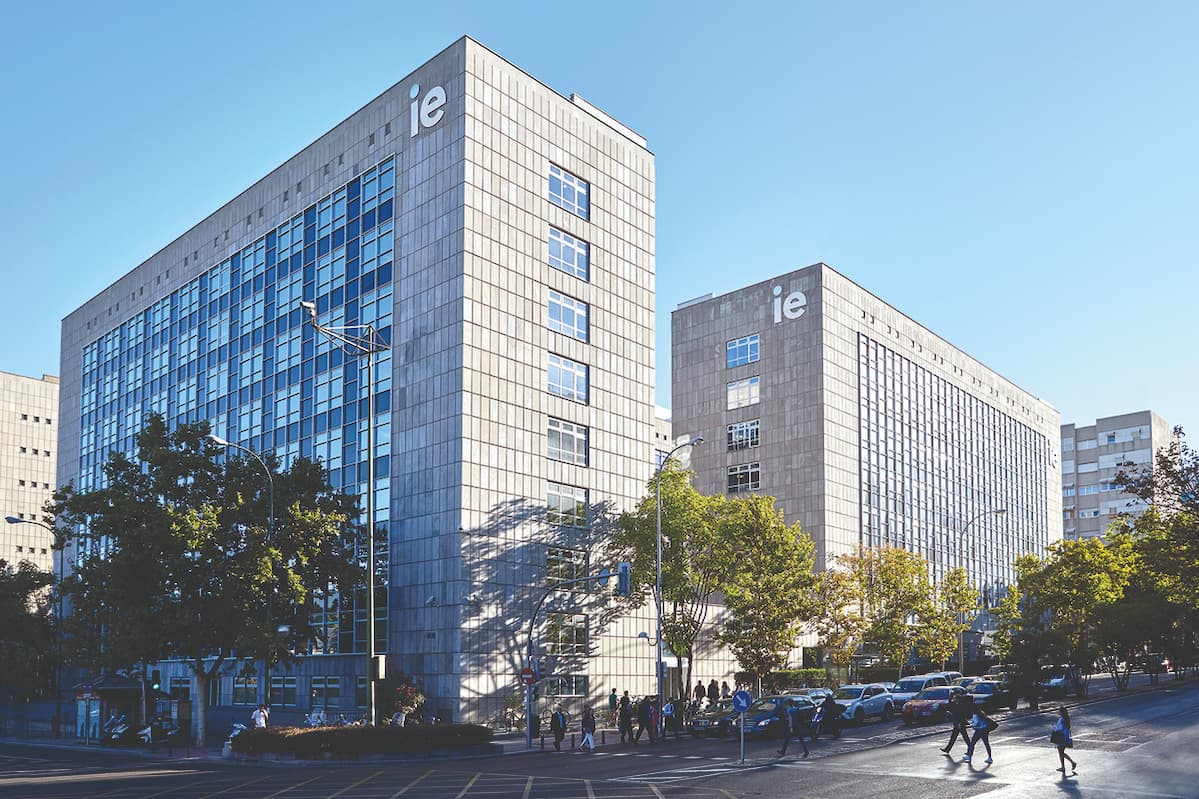
• Madrid, at IE University’s campus, where the program is anchored and where much of the core business curriculum is delivered. Set in one of Europe’s most internationally connected cities, the Madrid residential establishes the cohort and grounds participants in the strategic and commercial fundamentals of the program. Students engage with IE Business School’s faculty, its wider academic community and the broader professional ecosystem of a city that hosts the European headquarters of some of the world’s largest organizations. It is where the program begins and where its shared identity takes shape.
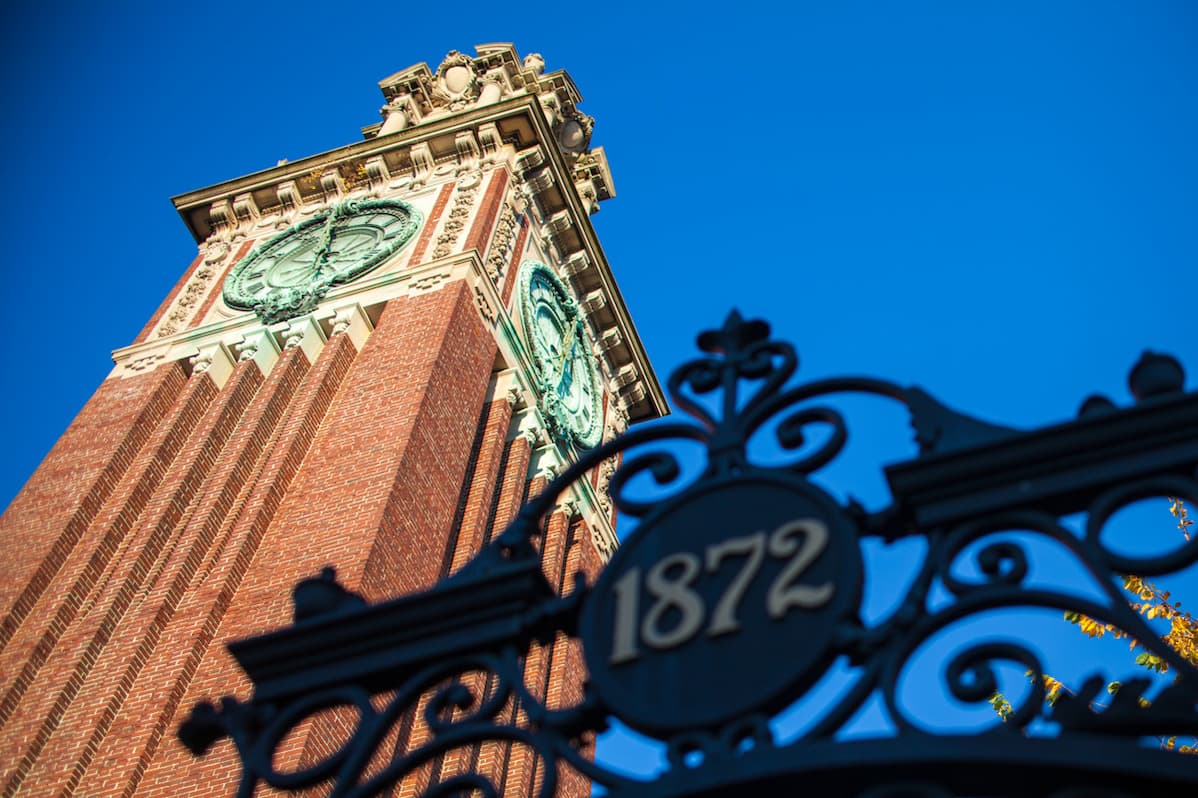 • Providence, Rhode Island, at Brown University, where participants engage directly with Brown’s academic environment and interdisciplinary approach. This residential is where the joint degree’s intellectual character becomes most tangible. Brown’s Ivy League campus provides access to faculty and perspectives drawn from economics, political science, sociology and history alongside business, reflecting the open-curriculum philosophy that distinguishes Brown’s contribution to the program. For many participants, this is the residential that most directly challenges how they think, not just what they know.

• Cape Town, a global immersion that brings together the program’s themes around leadership, sustainability and global business through direct exposure to one of the world’s most economically and socially complex cities. Cape Town offers a context for leadership that no classroom case study can replicate: a city navigating inequality, rapid economic development and significant environmental pressures simultaneously. Participants engage with local business leaders, social entrepreneurs and institutions operating at the intersection of these forces, making it one of the most intellectually demanding and personally affecting parts of the program.
The residential model is not incidental to the program’s value. You’ll build relationships across three continents with a cohort drawn from an international and diverse talent pool. This is what gives the program its #2 global ranking for diversity in the QS Executive MBA rankings. It is also a significant part of what participants most take away from the program.
Who is the IE Brown Executive MBA for?
The IE Brown Executive MBA requires a minimum of ten years of professional experience. It is not for early-career professionals or recent graduates. Explore more programs at IE Business School or Brown University.
The target profile is a senior professional. Your peers will typically be in leadership roles, managing teams or functions with high strategic impact. That might mean a move into the C-suite, a board role or into a new industry or geography. It could also simply mean a change in frameworks to lead more effectively in a role they already hold.
The cohort structure is also fixed. Participants move through the program together, creating the peer-learning dynamic that most alumni cite as one of the program’s most valuable elements.
How it fits in the executive education portfolio
IE Business School offers several programs for senior professionals, and the distinctions matter. The IE Brown Executive MBA is for candidates for whom Brown University’s interdisciplinary philosophy and the prestige of a dual-institutional affiliation are part of its value proposition.
The 15-month duration is also a factor for candidates who want a faster path to completion without a career break. Also, those who want to graduate with credentials from both IE Business School and Brown University will find this program appealing.

What the outcomes data shows
The program ranks #7 globally in the 2026 QS Executive MBA rankings. In addition, it ranks #2 worldwide specifically for Career Outcomes. This sub-ranking that tracks salary improvement, career progression and employer perception after graduation. IE Business School also ranks #9 globally for employer reputation, reflecting how organizations across industries perceive the credential.
According to the program’s alumni outcomes data, 78% of graduates secure a promotion within 12 months of completing the program. Average post-graduation salary increases range from 37% to 58%, depending on career path and timing.
For a deeper look at the financial case, the ROI and how candidates typically fund the program, see our article on what makes a joint degree different.